If you love a fragrance but want to discover other options with a similar smell, looking at the note list alone is rarely enough.
Two perfumes can contain many of the same notes and still smell completely different. At the same time, two fragrances with different note pyramids can create a surprisingly similar overall effect.
The easiest way to find a fragrance with a similar feel is to look at the full scent profile.
That means considering the main accords, fragrance family, sweetness, freshness, texture, drydown, concentration and the overall character of the scent.
NoseGuide is built to make that process easier.
Search for a fragrance you already love and explore fragrances that stay close to its character, alongside other perfumes that share a similar scent direction.

Start With the Part of the Fragrance You Actually Love
Before looking for a similar fragrance, ask yourself what makes you love the one you wear.
It might be the bright citrus opening.
It might be the warm spicy drydown.
Maybe you like the creamy vanilla, smoky woods, clean musk or powdery iris.
This matters because you may not actually be looking for something that recreates every part of the fragrance.
You may simply want another perfume that gives you the same feeling when you wear it.
If the drydown is what you love most, focus on the base and overall character rather than trying to match every top note.
Look at the Main Accords First
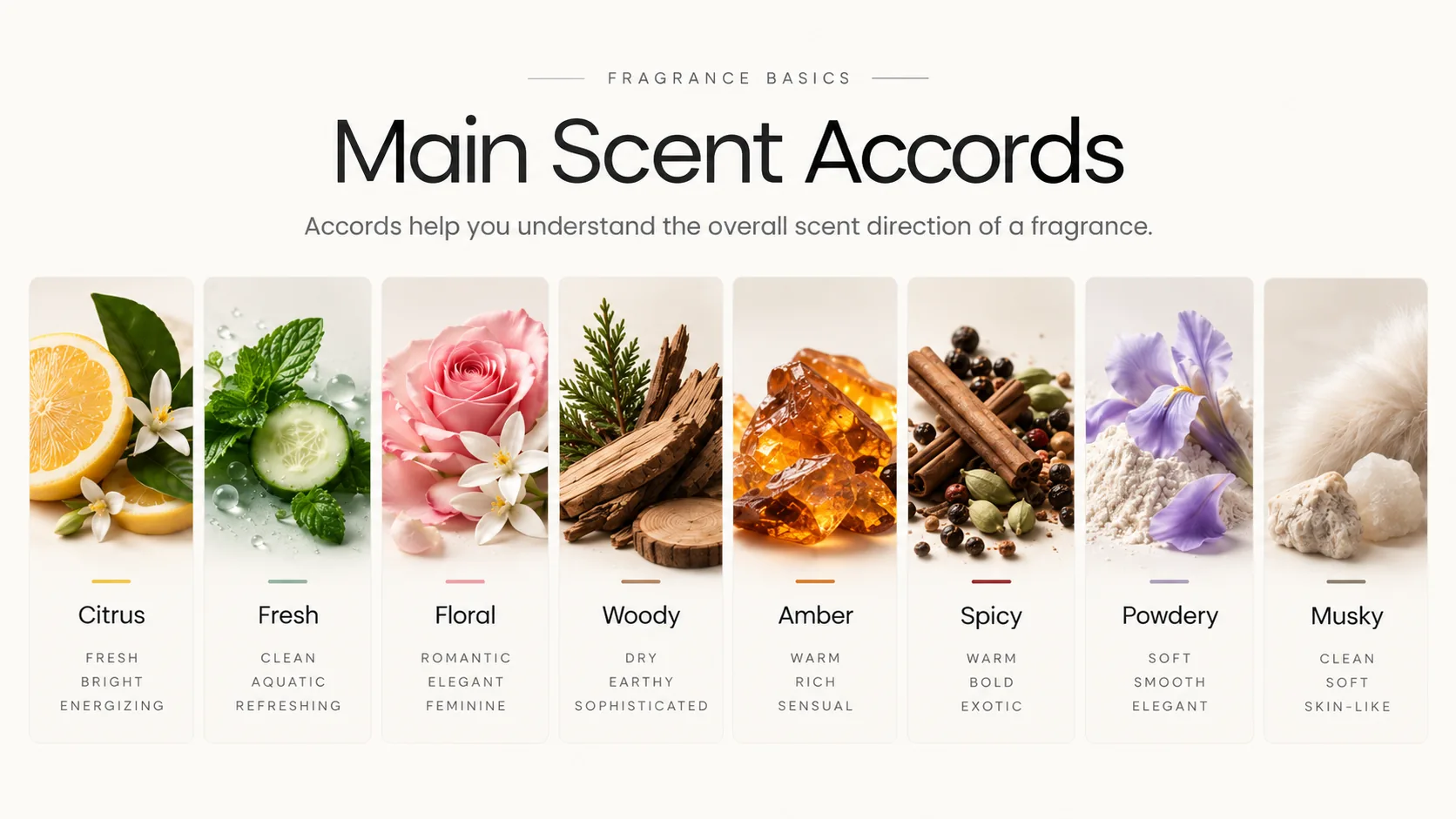
When trying to understand why two fragrances smell similar, the main accords are often more useful than the individual note list.
Think of accords as the larger scent impressions created by several notes working together.
A fragrance may feel:
- Fresh and aromatic
- Woody and smoky
- Warm and spicy
- Amber and sweet
- Powdery and musky
- Green and herbal
- Creamy and vanilla based
- Leathery and dark
If two perfumes share several dominant accords in roughly the same balance, there is a much better chance that they will feel related.
This does not mean they will smell identical.
It means they move in a similar scent direction.
The Note List Is Only Part of the Story
Notes are useful, but they should never be treated as a fragrance formula.
Seeing bergamot, vanilla and cedar listed in two perfumes does not mean those perfumes will smell alike.
One may use bergamot as the main character of the opening.
In another, it may disappear almost immediately.
The vanilla could be dry and subtle in one fragrance and rich and sweet in the other.
The way the notes are balanced matters just as much as the notes themselves.
This is why searching only by individual ingredients can produce disappointing results.
Pay Attention to the Fragrance Family
The fragrance family gives you another useful clue.
If you love a woody aromatic fragrance, you will usually have a better starting point with other woody aromatic scents than with a fragrance that happens to share one or two of the same notes.
Common directions include fresh aromatic, woody, amber, floral, leather, gourmand, green, musky and spicy styles.
The family does not tell you everything, but it helps narrow the search before you start comparing the finer details.
Compare the Opening and the Drydown Separately
Fragrances change as you wear them.
The first few minutes can smell completely different from the scent that remains several hours later.
That is why two perfumes may initially seem unrelated but become much closer once they dry down.
The opposite can also happen.
Two fragrances may have a similar fresh opening but develop into completely different scents later.
When comparing fragrances, think about both stages.
Ask yourself whether you want the same opening, the same drydown or the same overall experience.
Texture Makes a Bigger Difference Than You Think
Texture is difficult to understand from a note list, but it can completely change how a fragrance feels.
For example, vanilla can feel dry, creamy, powdery, smoky or very sweet.
Woods can feel smooth and polished or dark and rough.
Musk can feel clean and airy or warm and skin like.
When comparing fragrances, think about words such as:
- Dry
- Sweet
- Creamy
- Airy
- Dense
- Powdery
- Clean
- Smooth
These details often explain why one fragrance feels much closer than another, even when both contain similar notes.
Check the Concentration and Version
Always make sure you are comparing the correct version of a fragrance.
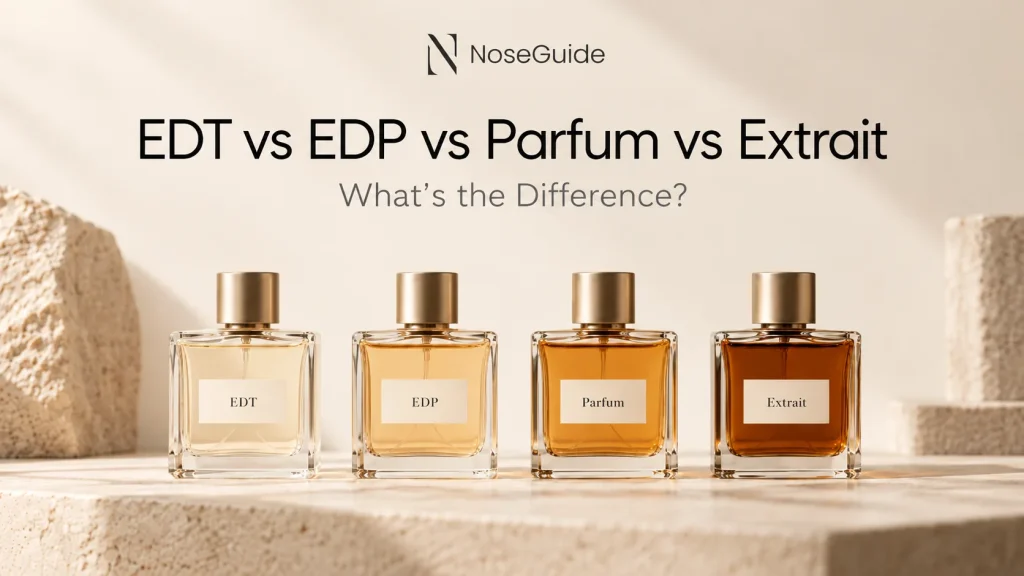
An Eau de Toilette, Eau de Parfum, Parfum and Elixir with the same name can have noticeably different compositions.
A stronger concentration does not necessarily mean that the fragrance is simply more powerful.
The balance of notes can change as well.
The Eau de Toilette may be fresher and brighter, while the Parfum could be sweeter, darker or more woody.
Flankers are even more important.
Two bottles with almost the same name may actually be very different fragrances.
Similar Fragrance Does Not Always Mean the Same Performance
Smell is only one part of the experience.
If you are looking for something similar to your favourite fragrance, consider how you actually wear it.
A perfume with a similar profile but very different performance may not serve the same purpose.
Look at longevity, projection and how noticeable the fragrance remains throughout the day.
Also think about when you wear it.
A strong evening scent and a lighter everyday fragrance may share a similar profile but work very differently in real life.
Start Close, Then Explore Further
Sometimes you want a fragrance that stays very close to the character of the one you already love.
Maybe you want a different price point or simply another option with the same general profile.
Other times, you want to go a little further.
You might want the same woody and spicy character but with less sweetness.
Or the same fresh aromatic style with more citrus.
Or something built around the same general idea but with stronger performance.
NoseGuide brings these different options together so you can start with the fragrances that share the most notes and then continue exploring scents with a related direction.
Your favourite fragrance becomes the starting point.
From there, you can discover both close scent profiles and other fragrances that fit the same general taste.
Looking for a More Affordable Option?
Price is one of the most common reasons people search for fragrances with a similar scent profile.
If you love a perfume but do not want to pay full retail price, there are several routes worth checking.
First, look at current prices for the fragrance you love.
Different retailers can have very different prices for the exact same bottle.
You may find the fragrance you already love at a significantly better price without needing to replace it.
If it is still outside your budget, then look at more affordable fragrances with a similar scent direction.
You can also consider smaller sizes and decants if you do not need a full bottle.
NoseGuide combines similar scent profiles with retailer and deal information so you can compare both the scent options and the buying options in the same place.
How NoseGuide Helps You Find Similar Perfumes
Searching manually for similar fragrances can take a lot of time.
Note lists alone do not give you the full picture, and recommendations from different sources can vary dramatically.
NoseGuide brings the important information together.
When you search for a fragrance, you can explore similar scent profiles connected to it and compare the characteristics that matter most.
We look at the overall scent direction rather than relying on a single shared note.
That includes factors such as the main accords, fragrance family, important notes, sweetness, freshness, texture and the overall character of the composition.
The goal is simple.
If you already know what you love, NoseGuide should make it easier to discover what else is worth smelling.
A Simple Way to Find Your Next Fragrance
When comparing perfumes, use this five step method:
- Identify the part of your favourite fragrance you enjoy most.
- Look at its dominant accords and overall fragrance family.
- Compare the sweetness, freshness, warmth and texture.
- Make sure you are comparing the correct concentration and version.
- Decide whether you want the closest possible scent profile or something that simply shares the same scent direction.
Once you know the answer to those questions, the search becomes much easier.
Do You Need an Exact Match?
Not necessarily.
There is no single definition of the perfect similar fragrance because different people notice different parts of the same perfume.
One person may focus on the opening.
Another may care almost entirely about the drydown.
Skin chemistry, temperature and even the amount you spray can also affect how a fragrance develops.
The best choice is therefore not always the one with the most similar note list.
It is the one that shares the parts of your favourite fragrance that matter most to you.
Whenever possible, sample before buying a full bottle.
FAQ
How do I find a perfume similar to one I already like?
Start with the main accords and overall scent profile of the fragrance you love. Then compare the fragrance family, dominant notes, sweetness, freshness, texture and drydown rather than looking only for identical note lists.
Do perfumes with the same notes smell similar?
Not necessarily. The same notes can be used in different proportions and combined with different ingredients, creating very different fragrances.
What is the best way to find a similar fragrance?
Identify what you like most about your favourite fragrance and look for perfumes that share the same dominant accords and overall scent direction. Comparing the drydown is especially important.
How can I find a more affordable fragrance with a similar scent profile?
Start by checking whether the fragrance you love is discounted at another retailer. If it is still outside your budget, look for more affordable fragrances with a similar scent profile and compare them by accords, notes and overall character.
Do fragrances with similar profiles smell the same?
Usually not. Some may stay very close to the overall character of the fragrance you know, while others share the same general scent direction but change certain elements such as sweetness, freshness, woods or spices.
Can an Eau de Toilette and Eau de Parfum smell different?
Yes. Different concentrations can change the balance of a fragrance, not only its strength. Always check the exact version when comparing perfumes.
What matters more, fragrance notes or accords?
Both are useful, but accords often give a clearer picture of the overall scent direction. Notes help explain the individual elements inside that profile.
Should I blind buy a fragrance just because it is similar to one I like?
Sampling is always the safer option when possible. A similar scent profile does not guarantee that you will experience both fragrances in exactly the same way.
Already Know What You Love?
Search for your favourite fragrance and discover fragrances with a similar scent direction, different price points and new options worth exploring.